Cobber Casino Complaints and Reputation: How to Evaluate Player Reports
 Available in AU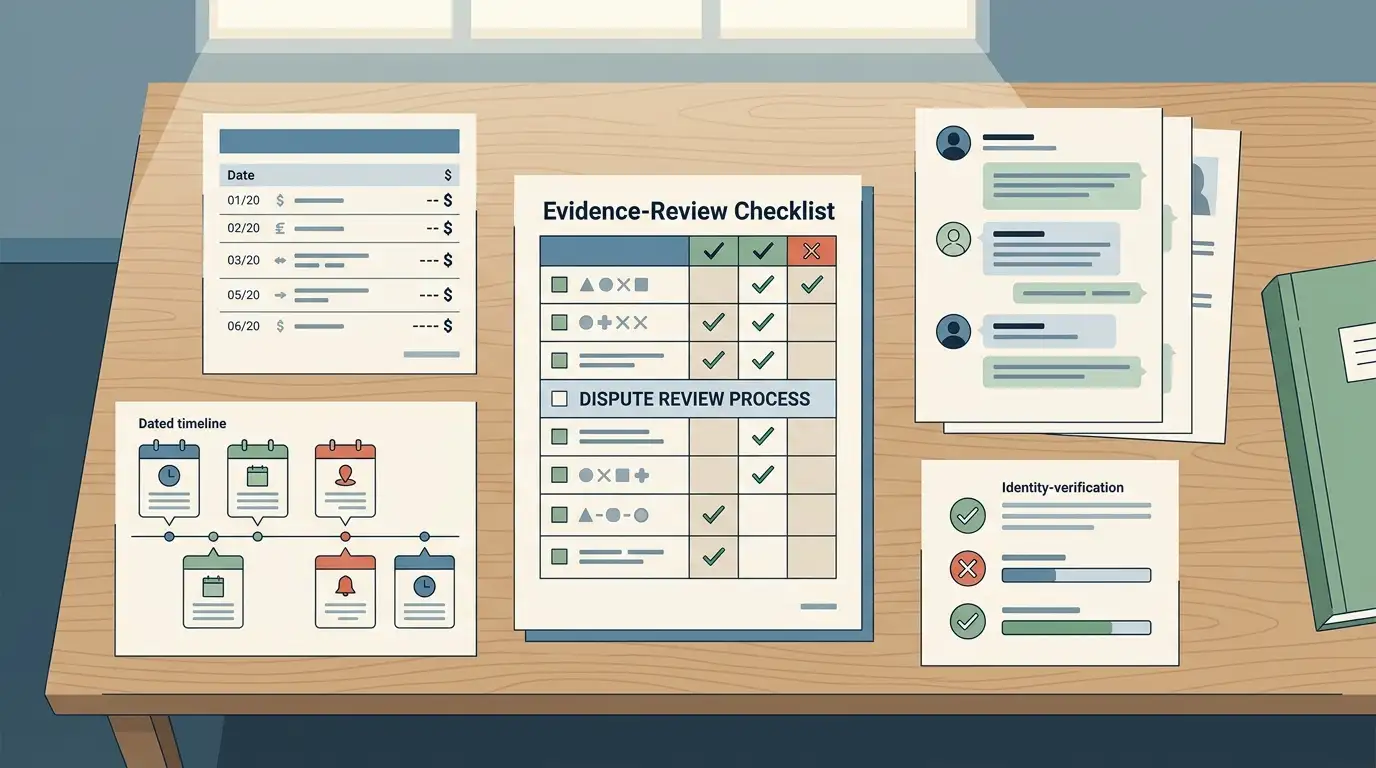
Contents
Independent review platforms contain both positive and negative user reports about Cobber Casino, including reports from Australian users. Those comments are useful signals, but an individual allegation is not proof of what happened in a private account. When this page was rechecked on 17 September 2026, Casino Guru’s Cobber database showed three listed complaints, with none open or unresolved and all three marked rejected. That is a platform-specific complaint inventory, not a verdict from this site.
Cobber’s current terms provide a separate, documented route for disputes. Complaints begin with the casino’s Support Team and can be escalated internally. If a player is dissatisfied with the outcome, the terms state that the matter may be escalated to EGIS, an alternative dispute-resolution body operating under Tobique Gaming Commission rules. That is not Australian local dispute-resolution coverage. The most useful way to read Cobber’s reputation is therefore to compare player reports with the specific account, KYC and withdrawal terms that could explain a dispute.
What the current complaint record actually shows
Complaint pages and user-review sections are not the same thing. A structured complaint database records cases handled through a platform’s complaint process. A user-review section lets customers describe their own experience, often without the documents needed to verify every claim. Both can help identify recurring themes, but they should not be treated as interchangeable evidence.
Casino Guru’s current Cobber page lists three complaints in its complaint inventory. At the time checked, none were open or unresolved and all three were marked rejected. The same review page also hosts user feedback. Another independent platform, CasinoFreak, contains both favourable and unfavourable player reports, including Australian entries. The existence of mixed feedback supports the need for a reputation page, but it does not establish that any particular accusation or praise is factually correct.
That distinction matters because casino complaints often turn on account-specific evidence that a public reviewer cannot see. A post may say a withdrawal was delayed, while the account record may show pending verification. Another post may say funds were confiscated, while the operator may rely on a duplicate-account clause. The correct editorial approach is not to choose a side from the wording of the review. It is to identify the rule being disputed and ask what evidence would confirm how that rule was applied.
For broader context, this site keeps offshore licensing and Australian local authorisation separate rather than turning them into a single reputation score.
Why payout complaints need the withdrawal terms beside them
Payout timing is one of the easiest topics to misread in player reviews. Cobber’s current terms say the operator aims to process withdrawal requests within 72 hours of approval. The wording is an operating target after approval, not a guarantee that every request reaches a bank, card or wallet within three days of clicking withdraw. Verification status and the selected payment method can affect the practical timeline.
The terms also set an overall daily withdrawal limit of A$4,500. A player describing a larger balance may therefore be talking about more than one withdrawal cycle rather than a single payment. That does not prove that any particular delay is justified, but it gives a concrete rule against which the timeline can be checked.
When reading a payout allegation, separate at least four dates: when the withdrawal was requested, when any KYC request was issued, when the requested documents were supplied, and when the withdrawal was approved. A public comment that collapses those stages into one phrase such as “waiting for payment” provides less useful evidence than a dated sequence.
The dedicated Cobber withdrawals page explains the verified payout limits and processing wording in more detail. The broader Cobber payment methods guide covers currencies and payment categories separately, which helps avoid blaming a general withdrawal rule for a method-specific issue.
KYC disputes: check what was requested and when
Cobber may require identity verification before processing withdrawals. Its current terms include government-issued photo ID and proof of address among the minimum identification documents and allow additional information to confirm identity or a payment method. The terms also state that withdrawal requests can remain pending while required verification is incomplete.
This makes KYC a common point where anecdote and documentation can diverge. A player may feel that repeated document requests are excessive. The operator may say the first submission was incomplete, mismatched or insufficient. Neither version can be independently established from a review post alone. The useful question is whether the requested material matches the published verification framework and whether the correspondence shows a clear sequence of requests and responses.
For a complaint about verification, preserve the exact request message, the date and time it was received, the filename or type of each document submitted, the submission timestamp and any acknowledgement from support. Avoid publishing unredacted identity documents or payment details on public review sites. The evidence should establish the process without exposing information that could create a new security problem.
Our Cobber KYC guide sets out the current Cobber KYC requirements and distinguishes operator-stated typical checking times from guaranteed completion times. That distinction is especially important when assessing claims about how long a verification “should” have taken.
Duplicate-account complaints need a precise account history
Cobber’s terms limit each individual to one personal player account and contain strict consequences for duplicate accounts. The current terms say accounts sharing a residential address, household, IP address or device can be treated as duplicates, and they reserve powers that include closing duplicate accounts, cancelling pending withdrawals and confiscating winnings.
That is a material rule when reading a complaint about account closure or forfeited winnings. It does not mean every duplicate-account allegation by the operator is automatically correct. It means the dispute cannot be understood properly without knowing which account identifiers or shared access circumstances the operator says triggered the rule.
A useful complaint record would therefore include the date the account was created, whether anyone else in the household has used the casino, whether devices or networks were shared, and the exact wording of the closure message. If the player says there was only one account, that statement remains an allegation until the underlying account records are available. If the operator says multiple accounts existed, that too is an account-specific assertion unless supported by evidence that can be reviewed.
The practical lesson is methodological: do not turn a disputed duplicate-account case into a general claim that the casino always confiscates winnings, and do not turn the existence of a duplicate-account clause into proof that every confiscation was valid.
How to build a complaint file before escalating
A concise evidence pack is usually more useful than a long emotional summary. The checklist below is a practical way to organise records; it is not a statement of legal requirements or a guarantee about how Cobber, EGIS or any other body will decide a dispute.
- Account timeline: record registration, deposit, bonus activation, KYC request, withdrawal request, approval or rejection, and account-closure times where relevant.
- Transaction identifiers: keep cashier references, blockchain transaction IDs where applicable, bank references and the exact amount and currency for each disputed transaction.
- Support correspondence: save the full email or chat sequence, including dates and any case number rather than only isolated excerpts.
- KYC record: note which document types were requested and when they were submitted. Store sensitive files privately rather than posting them publicly.
- Terms record: record the relevant rule and the date you accessed it, especially if the dispute concerns account duplication, wagering, withdrawal processing or verification.
- Requested outcome: state clearly what you want resolved, such as release of a withdrawal, explanation of an account decision or correction of a transaction record.
This structure makes it easier to compare a complaint with the published terms and to see where the factual disagreement actually lies. It also reduces the risk of mixing several separate issues into one accusation that is difficult for any reviewer to assess.
The official Cobber complaint and escalation route
Cobber’s current terms say complaints are initially handled by the Support Team. If the issue cannot be resolved immediately, it is escalated within the casino’s organisation, and the terms say the player will be kept reasonably informed about the complaint’s status.
If the player remains dissatisfied after the internal process, the terms state that the matter may be escalated to EGIS as an independent ADR body operating under Tobique Gaming Commission regulations. For an Australian reader, the jurisdiction matters. This is the operator’s offshore complaint route under its TGC framework. It should not be presented as an Australian regulator, Australian ombudsman or Australian local casino dispute scheme.
A current check of ACMA’s licensed interactive gambling provider register did not verify an Australian local licence for Cobber Casino or Novatrix SRL. That is why the EGIS route is not presented as Australian local regulatory coverage. The distinction is about jurisdiction, not about predicting how an individual complaint will be decided.
If a dispute concerns the broader legal or licensing context rather than an account event, use the Cobber licence guide rather than relying on reputation scores from review platforms.
How to read reputation signals without turning them into a verdict
Reputation data is most useful when it is treated as a map of questions, not an answer by itself. A pattern of payout comments should prompt a check of withdrawal limits, approval timing and KYC. Duplicate-account complaints should prompt a check of the one-account clause. Bonus disputes should be compared with the specific promotion terms in force at the time. Positive reviews should be treated with the same discipline: a fast payout reported by one player does not guarantee the same result for every method, amount or verification state.
Platform ratings belong to the services that publish them. Their scores can be useful context, but this site does not adopt a third-party overall rating as its own conclusion.
The strongest signals are the ones that can be tied to current, checkable records: the operator’s terms, regulator registers, dated transaction records and complete correspondence. User reviews remain useful for discovering the kinds of problems people report, but they are secondary evidence about events that usually occurred in private accounts.
For a broader summary of Cobber’s features and the evidence behind this site, return to the Cobber Casino Australia review. The purpose of this complaints page is narrower: to help you separate sentiment from documentation and to understand the dispute route Cobber currently publishes.
Bottom line
Cobber’s reputation cannot be reduced responsibly to a single “safe” or “scam” label. Current independent sources show mixed user feedback, while Casino Guru’s complaint inventory showed three listed cases and none open or unresolved when checked on 17 September 2026. Those are platform observations, not proof about every player’s experience.
For a specific dispute, start with the underlying rule and the timeline. Check the one-account restriction, KYC status, withdrawal limit and approval stage where relevant. Preserve complete records. Use Cobber’s internal complaint process first if you are following the route in its terms, and understand that its stated EGIS escalation path sits under the Tobique Gaming Commission framework rather than Australian local dispute-resolution coverage.
This material was created by the Cobber Casino Australia Guide team.
Related posts

Cobber Casino Games Australia: Library, Providers and Restrictions
Cobber Casino Bonus Australia: Welcome Offer and Key Terms