Cobber Casino Licence and Australia: TGC, ACMA and Regulatory Context
 Available in AU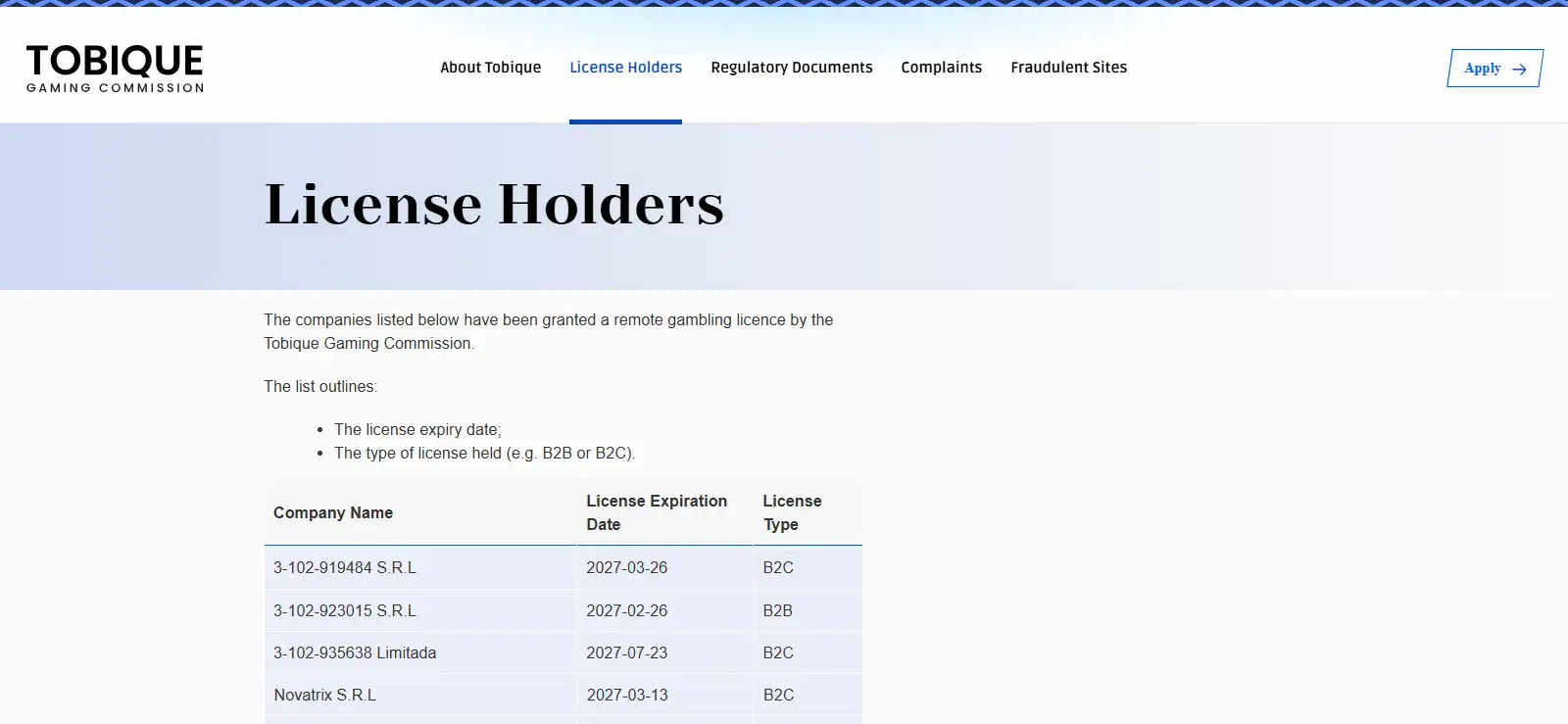
Contents
Cobber Casino is owned and operated by Novatrix SRL. Cobber states that Novatrix operates under Tobique Gaming Commission licence no. 0000002, and the TGC public register currently lists Novatrix S.R.L as a B2C licence holder through 13 March 2027. That is offshore licensing evidence. It is not an Australian casino licence.
No Australian local licence was verified for Cobber or Novatrix in ACMA’s licensed interactive gambling provider register. Separately, ACMA states that the Interactive Gambling Act 2001 makes it illegal for gambling providers to offer certain online services to people in Australia, including online casinos. Those facts should be kept distinct: offshore licence status, Australian register status and Australia’s provider-side online casino rules answer different questions.
Who operates Cobber Casino?
Cobber’s current site and terms identify Novatrix SRL as the owner and operator. Cobber’s published operator information also gives the Costa Rican registration number 3-102-893958. This identifies the company behind the service; it does not by itself answer where the gambling activity is licensed or whether a service is authorised under Australian law.
That distinction is useful because operator identity, corporate registration and gambling licensing are often compressed into one vague “licensed company” statement in thin casino reviews. They are separate facts. A corporate registration number identifies a legal entity in a company registry context. A gambling licence identifies regulatory permission granted by a gaming authority. Australian authorisation is a third question again.
What does the Tobique Gaming Commission evidence show?
Cobber states that Novatrix SRL operates under Tobique Gaming Commission licence no. 0000002. The public TGC licence-holder register provides an independent current check on the operator: it lists Novatrix S.R.L with a B2C licence expiring on 13 March 2027. The register page says the listed companies have been granted remote gambling licences by the Tobique Gaming Commission.
The public table confirms the company, licence type and expiry date. In the retrieved register view, it does not expose Cobber’s stated licence number next to the Novatrix row. For that reason, the number 0000002 is presented as the licence number stated by the operator, while the B2C status and 13 March 2027 expiry are presented as the TGC register result.
This is a useful evidence split. It avoids pretending the register displayed a detail that was actually taken from Cobber’s own terms, while still showing that the named operator appears in the regulator’s current B2C list.
Is Cobber licensed in Australia?
No Australian local licence was verified for Cobber Casino or Novatrix SRL in ACMA’s register of licensed interactive gambling providers. ACMA says an online wagering service must appear on that register to operate legally as a licensed interactive wagering service in Australia. The register was last updated on 7 September 2026 when rechecked for this page.
That register check should not be rewritten as “Cobber has no licence” because there is separate TGC evidence. The precise statement is that Cobber has offshore licensing evidence through Novatrix and the TGC, while no Australian local licence was verified in the ACMA register.
For an Australian reader, the practical value of checking the local register is precision rather than a badge-style verdict. A service can name an offshore regulator, accept AUD and publish an Australian-facing page while still not appearing in the Australian licensed-provider register. Conversely, an Australian wagering licence would need to be established through the relevant Australian licensing framework rather than inferred from localisation or payment support. Keeping the register check separate from the offshore licence prevents both overclaiming and understatement.
The licence distinction also should not spill into unrelated facts. Cobber’s verified Cobber payment methods, account currencies or Cobber games are separate factual questions. A local-licence result does not turn sourced feature facts into speculation.
What Australian law says about online casino services
At Commonwealth level, the key law is the Interactive Gambling Act 2001. ACMA’s current guidance says the Act makes it illegal for gambling providers to offer some online services to people in Australia and lists online casinos among the banned services. ACMA also lists in-play sports betting, sports betting services without an Australian licence and betting on the outcome of a lottery among banned categories.
This is provider-side regulatory wording. It should not be stretched into a blanket statement that an Australian player commits a criminal offence simply by visiting or using every offshore casino. This page does not make that player-liability claim. It reports the service-provider rule stated by ACMA and the licensing evidence specific to Cobber.
ACMA can investigate prohibited or unlicensed interactive gambling services and uses enforcement tools including formal warnings and website blocking. Its blocked-site guidance explains that online casinos and online slot-machine services supplied to Australian customers are examples of prohibited interactive gambling services that can lead to blocking action.
Why an offshore licence and an Australian licence are not equivalent
An offshore B2C licence tells you that an operator appears under the named offshore regulator’s framework. It does not create Australian licensing, Australian dispute rights or coverage under safeguards designed for licensed Australian wagering services.
For Cobber, the evidence supports a clear three-layer view:
- Operator layer: Novatrix SRL is the company identified as owning and operating Cobber.
- Offshore licence layer: Cobber states TGC licence no. 0000002, and TGC independently lists Novatrix S.R.L as B2C through 13 March 2027.
- Australian layer: no Cobber or Novatrix local licence was verified in ACMA’s licensed-provider register, while ACMA says online casinos are prohibited provider-side services under the Interactive Gambling Act.
Keeping those layers separate is more informative than a one-word “legal” or “illegal” verdict. It also makes clear which protections and complaint routes should not be assumed.
BetStop and the National Consumer Protection Framework
Australia has consumer-protection measures for licensed online wagering. The National Consumer Protection Framework for Online Wagering sets nationally consistent minimum protections for that licensed wagering market. BetStop, the National Self-Exclusion Register, allows people to self-exclude from all licensed Australian online and phone wagering providers.
Those programs are important Australian safeguards, but their scope should not be misrepresented as proof that an offshore online casino account is covered by the same system. The evidence on this site does not establish Cobber as an Australian licensed wagering provider. Therefore, the existence of BetStop or the NCPF should not be described as Cobber-specific protection.
If you are comparing the operator’s account and verification process, see Cobber registration. That page deals with Cobber’s own terms. It does not convert those internal rules into Australian regulatory coverage.
What changes in the 2026 Australian reform package?
Australia passed the Interactive Gambling Amendment (Gambling Reform) Act 2026 in August 2026. The government says reforms commence from 1 January 2027 and include tighter wagering advertising restrictions, stronger enforcement against illegal gambling services, inducement controls and changes designed to strengthen BetStop. The Act received assent on 26 August 2026.
As of 17 September 2026, that commencement date is still in the future. It would therefore be misleading to describe the January 2027 measures as already operating in full. Current Cobber analysis should use the law and ACMA guidance in force now, while noting the dated future reforms where they affect enforcement and the broader gambling-regulation environment.
The reform package is also broader than Cobber. It should not be presented as a Cobber-specific enforcement finding. Its relevance here is that Australia is strengthening the regulatory framework around wagering advertising, illegal-service disruption and self-exclusion from the start of 2027.
ACMA enforcement is active, but evidence must remain operator-specific
ACMA publishes quarterly enforcement reports and maintains a list of blocked illegal gambling websites. That demonstrates active use of the Interactive Gambling Act, but a general enforcement program is not evidence that every named offshore casino has received the same action.
ACMA’s April to June 2026 enforcement report contains operator-level context involving Novatrix SRL in relation to other casino brands. That context should not be converted into a Cobber-specific warning or block without brand-level evidence.
The same evidence discipline applies in the opposite direction. The absence of a Cobber name from one blocked-site search would not prove Australian legality. Register status, blocked-site status and general provider prohibitions are different evidence types and should not be treated as interchangeable.
What the licence evidence does not tell you about games, bonuses or payments
Licence status is an isolated fact. It does not determine whether Cobber currently supports AUD, which payment categories appear in its terms, how many games are listed or what welcome offer is shown. Those claims are verified independently on their own pages.
For example, the Cobber Casino bonus page checks the current offer and its terms directly. The games pages document the current lobby and provider evidence. The payments section checks payment and withdrawal rules. None of those factual sections should be made vague simply because the operator’s gambling licence is offshore rather than Australian.
The reverse is also true: a verified feature does not answer the licensing question. A site can support AUD or display an Australian-localised page without appearing on the Australian licensed-provider register. Product localisation is not a regulatory licence.
Complaints and dispute routes need the same jurisdiction distinction
Cobber’s own terms provide a complaint process, and the site documents an escalation route. That operator process can be relevant to an account dispute, but it should not be described as Australian local dispute-resolution coverage unless a source establishes that connection.
The dedicated Cobber complaints guide separates internal support, the stated escalation route, public reputation signals and Australian regulatory context. If your concern is a payout or account decision, keep records of the transaction, KYC request and correspondence before escalating.
This is another reason a simple “licensed” badge is not enough for trust analysis. The practical questions are who regulates the operator, what jurisdiction the licence belongs to, what dispute mechanism applies, and whether the player has access to local Australian protections. Those answers are not automatically identical.
A practical trust checklist for Australian readers
- Confirm the operator name rather than relying only on the casino brand.
- Check the offshore regulator’s current public register for the operator.
- Keep the operator-stated licence number separate from details independently visible in the register.
- Check ACMA’s licensed interactive gambling provider register before assuming Australian licensing.
- Read ACMA’s current Interactive Gambling Act guidance for the service category involved.
- Do not treat AUD support, an Australian page or localised marketing as licence evidence.
- Do not assume BetStop or NCPF protections apply to an offshore casino account.
- Check current terms for payments, games and bonuses separately from licence status.
- Use the documented complaint route if an account dispute arises and retain a clear evidence trail.
For a full operator-level starting point, return to the Cobber Casino Australia review. This page answers the licence and regulation question; it does not replace separate checks on product terms and account conditions.
Current source check
The regulatory evidence was rechecked on 17 September 2026. The TGC public licence-holder register still lists Novatrix S.R.L as a B2C licence holder through 13 March 2027. ACMA’s licensed-provider register, last updated 7 September 2026, did not verify a Cobber or Novatrix Australian local licence. ACMA’s current Interactive Gambling Act guidance continues to list online casinos among services providers are prohibited from offering to people in Australia. The Australian Government’s current reform page says the 2026 reforms commence from 1 January 2027.
Authoritative sources: Tobique Gaming Commission licence holders, Australian Government Gambling Reforms 2026 and Interactive Gambling Amendment (Gambling Reform) Act 2026.
How to read the three regulatory layers
The operator identity, the Tobique licence and the Australian regulatory position should be checked as three separate layers. Novatrix SRL identifies the company behind Cobber. The TGC register entry shows the offshore B2C licence status and its published expiry date. The ACMA register and Interactive Gambling Act guidance answer a different question: whether the service has Australian local licensing and how Australian provider-side restrictions apply. A fact in one layer does not replace evidence from another.
This separation also helps when terms change. A new promotion, payment option or game provider does not alter the licensing record by itself, while a licence renewal does not establish Australian authorisation. Readers comparing the brand over time should therefore recheck the operator and licence details independently from the product pages, then use the Australian regulatory sources for the local legal context.
This material was created by the Cobber Casino Australia Guide team.
Related posts
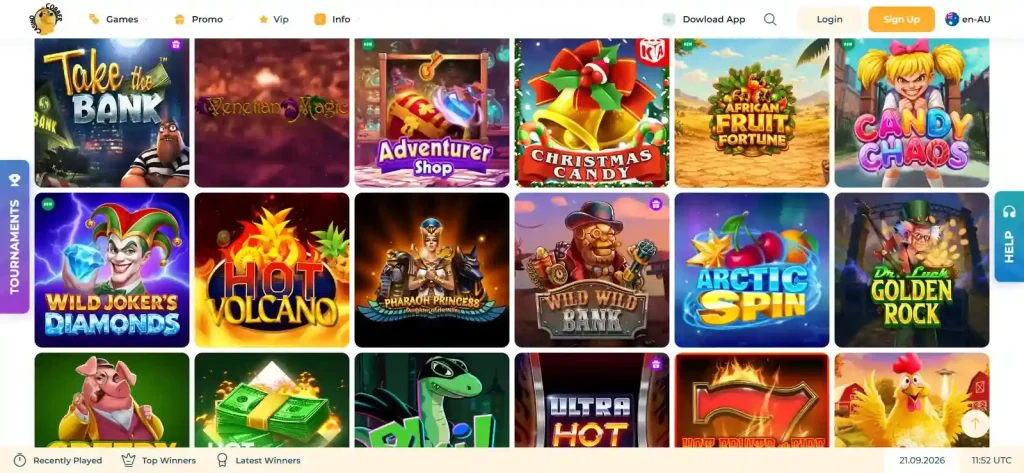
Cobber Casino Games Australia: Library, Providers and Restrictions
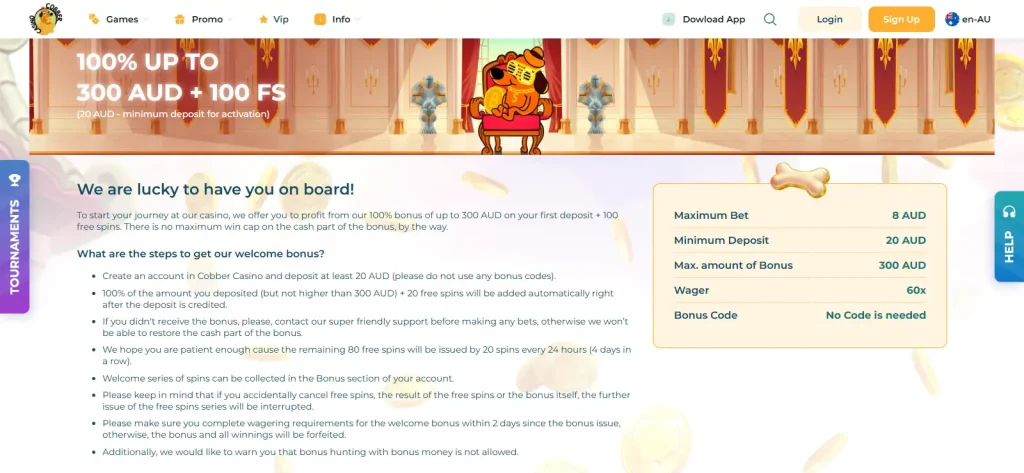
Cobber Casino Bonus Australia: Welcome Offer and Key Terms